Understanding MGO: What It Means and Why It Matters in Manuka Honey
Manuka honey is known for its rich flavour, distinctive aroma, and naturally occurring activity. But among all the terms associated with Manuka, one stands out more than any other: MGO. These three letters appear on labels around the world, yet many people are unsure of what they truly represent.
MGO is one of the key natural markers that makes Manuka honey unique. It is also a reliable way for consumers to understand the honey’s strength and authenticity. For anyone exploring premium Manuka, especially higher-grade varieties, knowing what MGO means is essential.
This guide breaks down the concept in a clear, accessible way, without medical claims or complexity.
What Is MGO?
MGO stands for methylglyoxal, a naturally occurring compound found in significant concentrations in Manuka honey. While all honey contains a variety of natural enzymes and compounds, Manuka honey is unique because it develops naturally high levels of MGO as part of its formation.
MGO originates from a substance in Manuka nectar called DHA (dihydroxyacetone). Over time, DHA converts into MGO, creating one of the most recognisable markers of Manuka’s natural activity.
This transformation is what gives Manuka honey its characteristic potency and sets it apart from other honey varieties.
Why MGO Is Measured
Because MGO forms naturally in Manuka honey and contributes to its unique qualities, it is used as a measurable indicator of strength. Independent laboratories test MGO levels to verify the honey’s authenticity and grade.
Higher MGO numbers typically reflect:
• stronger natural activity
• a richer, more robust Manuka character
• a higher level of rarity due to the conditions required to produce it
• Manuka nectar collected during optimal seasonal flow
This grading system gives consumers clarity. Instead of relying on assumptions or branding, they can look directly at the MGO rating to understand what they’re purchasing.
How MGO Levels Vary in Nature
MGO levels are shaped entirely by natural conditions. Everything from weather patterns to soil health to the timing of Manuka blooms influences the nectar’s DHA content. Because of this, high-MGO Manuka honey is uncommon and cannot be artificially manufactured.
Several factors contribute to MGO variations:
• Short flowering seasons mean limited harvest windows
• Specific Manuka species produce nectar with naturally higher DHA
• Healthy bees collect nectar more consistently
• Pristine environments support unpolluted, high-quality nectar
• Cold extraction and careful handling protect the honey’s natural composition
No two seasons produce identical results, which is why each batch of genuine Manuka honey carries its own character and MGO rating.
The Role of Independent Lab Testing
With Manuka honey in high demand worldwide, authenticity matters. Independent lab testing ensures that the MGO listed on a jar is accurate and traceable.
Testing typically verifies:
• the exact concentration of MGO
• the presence of other natural Manuka markers
• that the honey is monofloral
• that it meets the standards set by governing bodies, such as the Australian Manuka Honey Association
For consumers, this means peace of mind. A verified MGO rating is a sign of transparency and integrity.
Understanding MGO Labels
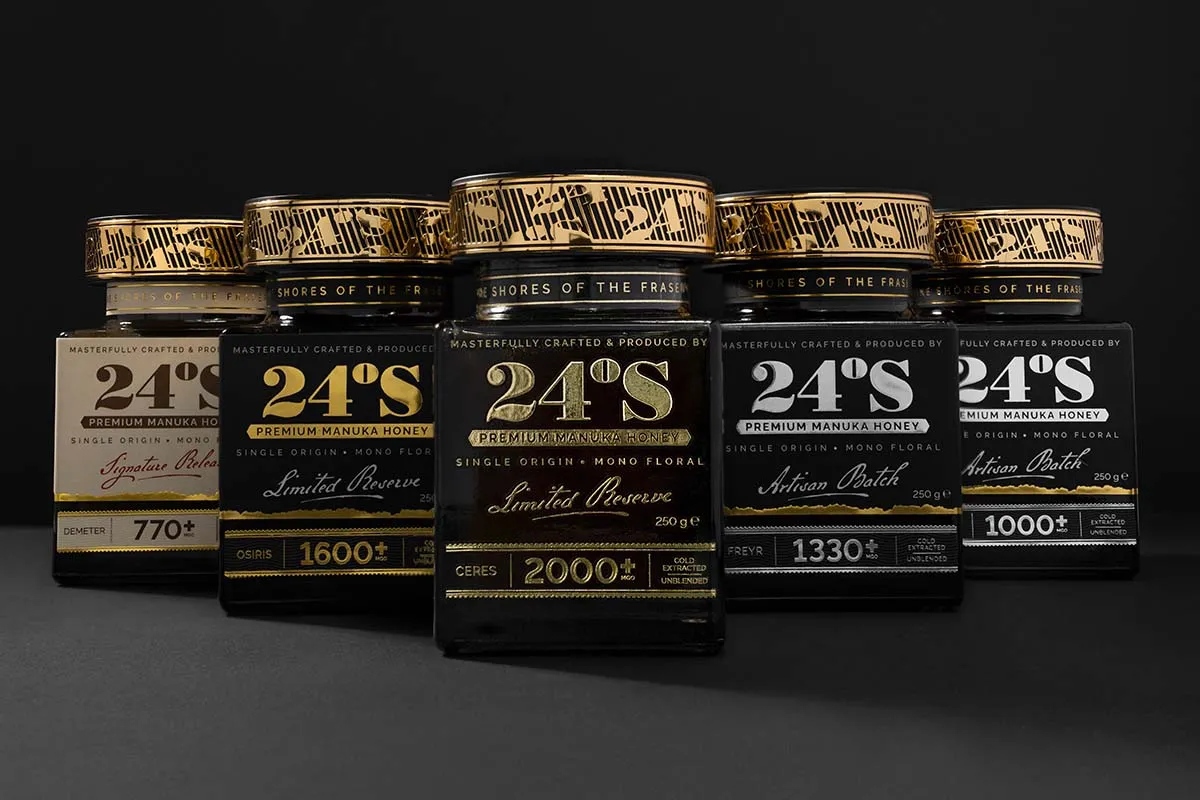
Manuka honey labels often display numbers like 770+, 1000+, 1330+, 1700+, or even 2000+. These numbers indicate the minimum amount of methylglyoxal (in mg/kg) that the honey contains.
While the label shouldn’t be viewed as the sole measure of quality, it does help shoppers choose the level of natural activity they prefer.
For example:
• Everyday enjoyment: lower-range MGO honeys
• Premium gifting or collectors: mid- to high-range MGO levels
• High-end buyers seeking rare quality: 1700+ and 2000+ tiers
• Limited seasonal releases: extremely high-MGO batches
Each MGO level reflects a different expression of nature, not simply a “better or worse” scale.
Why MGO Matters to Consumers
MGO is one of the clearest ways to understand what makes Manuka honey distinct. It provides an objective, measurable indicator of the honey’s naturally occurring activity and gives consumers confidence in what they’re buying.
For people seeking authenticity, MGO testing is a valuable assurance that the honey is genuine, unblended, and true to its origins.
A Natural Marker of Manuka’s Identity
Manuka honey’s reputation has been built on the natural activity it develops over time. MGO is at the heart of that story. It is a marker of purity, provenance, and craftsmanship. And while the chemistry behind it is complex, its meaning is simple.
When you see an MGO number on a jar of Manuka honey, you’re seeing a reflection of the environment, the season, the bees, and the natural transformation that makes this honey so extraordinary.
Related posts
What Makes Australian Manuka Honey Unique? A Look Into Our Native Biodiversity

Inside the Hive: How Healthy Bees and Pristine Environments Shape Premium Manuka Honey

The Art of Cold Extraction: Preserving the Natural Integrity of Manuka Honey
Understanding MGO: What It Means and Why It Matters in Manuka Honey

Monofloral, Unblended, Single Origin: Why These Qualities Matter in Genuine Manuka Honey

Australian vs New Zealand Manuka: What’s the Real Difference?

From Bloom to Bottle: The Seasonal Journey of High-Grade Manuka Honey

Why Provenance Matters: The Fraser Coast and the Making of Exceptional Manuka

How to Choose a Genuine Manuka Honey: Certifications, Testing, and Transparency