From Bloom to Bottle: The Seasonal Journey of High-Grade Manuka Honey

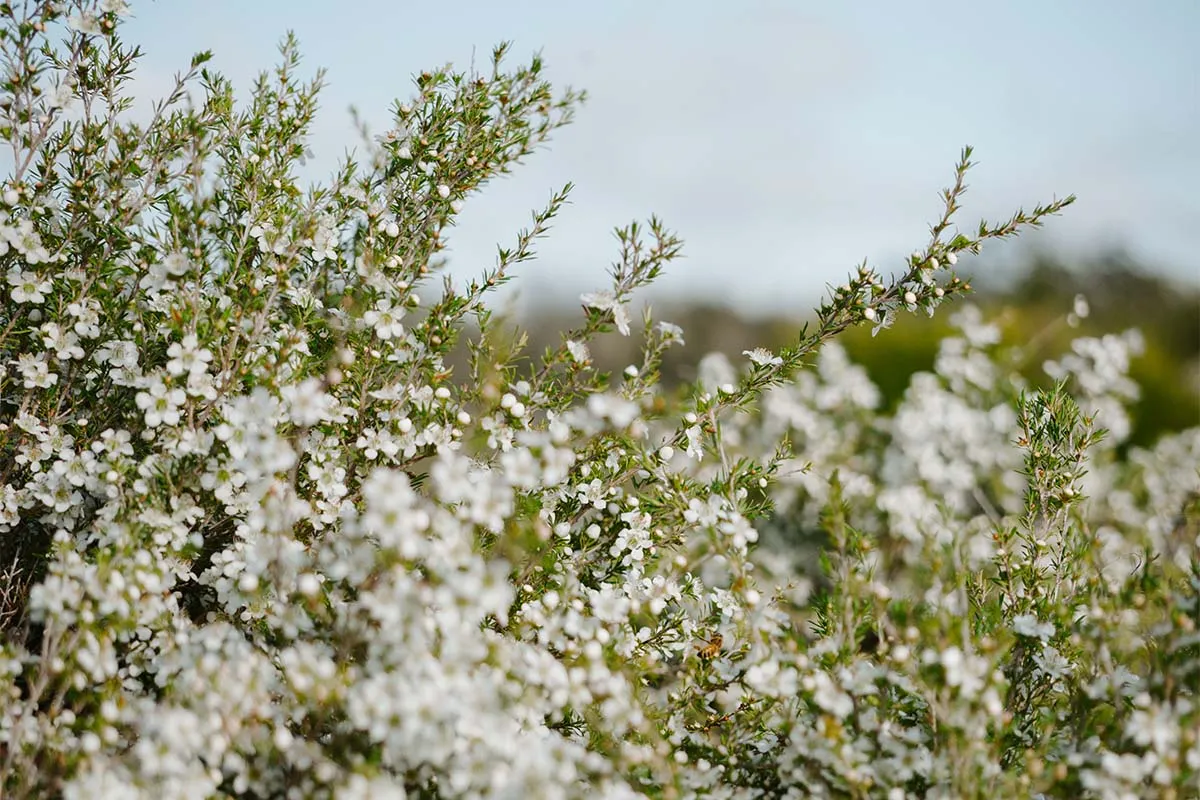
Every jar of Manuka honey begins long before the hive, in a fleeting moment when the Manuka trees burst into bloom. These blossoms, delicate and short-lived, hold the nectar that makes Manuka honey one of the world’s most coveted natural products. The journey from those first flowers to a finished jar is precise, seasonal, and deeply connected to the rhythms of the landscape.
For high-grade Manuka honey, the process is even more intricate. It relies on timing, weather, healthy bees, and a gentle approach that preserves the honey’s natural character.
This is the story of how Manuka honey moves through its seasonal lifecycle, from the first bloom to the final seal on the jar.
The Flowering Season: A Narrow Window of Opportunity
Manuka trees flower for only a short period each year. In Queensland’s Fraser Coast region, the timing can shift depending on rainfall, temperature, and seasonal patterns, but the window is always limited.
During this brief bloom:
• bees gather as much nectar as nature allows
• weather conditions must remain favourable
• apiaries must be positioned with precision
• the entire harvest depends on these weeks
The rarity of high-MGO Manuka honey is, in part, a reflection of this tight flowering season. When conditions are perfect, nectar flows freely. When conditions shift, the harvest can change dramatically.
Bee Foraging: The Dance Between Hive and Blossom
Once the Manuka trees bloom, bees begin their daily foraging cycles. Healthy, well-supported colonies move instinctively from flower to flower, collecting nectar and returning it to the hive.
The success of the harvest depends on:
• stable weather during bloom
• access to strong Manuka stands
• the proximity of hives to flowering trees
• the health and strength of the bee colony
• minimal interference from competing floral sources
When everything aligns, bees can gather nectar rich in the natural compounds that distinguish Manuka honey from all other varieties.
Nectar to Honey: A Natural Transformation
Inside the hive, nectar undergoes a slow, natural transformation. Worker bees fan their wings to reduce moisture, convert sugars, and allow the honey to develop its rich texture and depth. This process is entirely natural and cannot be replicated artificially.
During this phase, early indicators of MGO potential begin forming from the nectar’s naturally occurring DHA. As the honey matures over time, these markers develop into the characteristic qualities associated with Manuka honey.
Each hive’s honey is shaped by:
• the specific Manuka species in bloom
• the microclimate of the region
• the timing of the nectar flow
• the health of the bees
• the environmental conditions around the apiary
No two seasons are identical, which is why each harvest carries its own signature.
Cold Extraction: Protecting the Honey’s Natural State
Once the honey is ready, beekeepers extract it using cold methods to preserve its natural integrity. This step is crucial for maintaining the honey’s raw texture, flavour, and naturally occurring characteristics.
Cold extraction ensures that:
• the honey is never overheated
• its natural properties remain intact
• its flavour and aroma stay true to its floral source
• enzymes and structure are preserved
• each batch reflects the individuality of the season
Because 24 Degrees South keeps honey from each hive separate, every jar holds the authentic qualities of a single harvest.
Batch Testing: Verifying Authenticity and Strength
After extraction, each batch undergoes independent laboratory testing. These tests confirm MGO levels, monoflorality, and the presence of key Manuka markers.
This step ensures:
• transparency
• traceability
• protection against blending or dilution
• compliance with recognised Manuka standards
• confidence for consumers seeking genuine Manuka honey
The testing stage is where the honey’s seasonal character is officially captured.
Bottling: The Final Expression of the Season
Once verified, the honey is bottled with care, maintaining its natural purity. Premium producers use gentle methods and avoid unnecessary processing to honour the honey’s origin.
Each jar represents:
• a specific moment in nature
• the success of a single flowering season
• the craft of the beekeepers
• the integrity of the environment
• the natural activity developed over time
No two seasons produce identical honey, and that uniqueness is what makes each jar so special.
A Seasonal Story Captured in Every Jar
The journey from bloom to bottle is a slow, deliberate process shaped by nature, not machinery. It is a story of timing, weather, biodiversity, bee health, and the patience required to protect something inherently rare.
When you open a jar of genuine Manuka honey, you are experiencing the work of an entire landscape. A single flowering season. A natural process that cannot be rushed.
High-grade Manuka honey is not just a product. It is a seasonal expression of nature at its most remarkable.
Related posts
What Makes Australian Manuka Honey Unique? A Look Into Our Native Biodiversity

Inside the Hive: How Healthy Bees and Pristine Environments Shape Premium Manuka Honey

The Art of Cold Extraction: Preserving the Natural Integrity of Manuka Honey
Understanding MGO: What It Means and Why It Matters in Manuka Honey

Monofloral, Unblended, Single Origin: Why These Qualities Matter in Genuine Manuka Honey

Australian vs New Zealand Manuka: What’s the Real Difference?
From Bloom to Bottle: The Seasonal Journey of High-Grade Manuka Honey

Why Provenance Matters: The Fraser Coast and the Making of Exceptional Manuka

How to Choose a Genuine Manuka Honey: Certifications, Testing, and Transparency