Why Provenance Matters: The Fraser Coast and the Making of Exceptional Manuka

In the world of premium foods, provenance isn’t just a detail. It is the story that gives a product its meaning. Where something comes from shapes what it becomes, and this is especially true for Manuka honey. Unlike mass-produced honey sourced from varied regions and floral origins, high-grade Manuka is deeply tied to its environment. Every jar reflects the landscape, the climate, and the natural conditions of its source.
For 24 Degrees South, the Fraser Coast is more than a location. It is the foundation of the honey’s purity, depth, and natural character. This coastal region of Queensland is one of the most unique Manuka-producing environments on Earth, and its ecological richness can be tasted in every harvest.
The Fraser Coast: A Landscape Built for Manuka
The Fraser Coast stretches across a diverse ecological zone where coastal breezes meet native woodland. It borders K’Gari, the world’s largest sand island and a UNESCO World Heritage site known for its pristine natural beauty. This untouched backdrop creates an environment where bees and native flora thrive in rare harmony.
The region offers:
• rich stands of diverse Manuka species
• warm, subtropical temperatures
• clean, mineral-rich coastal air
• long stretches of unpolluted woodland
• a stable environment ideal for nectar flow
These elements combine to create a microclimate uniquely suited to producing high-quality Manuka nectar.
Diverse Native Manuka Flora
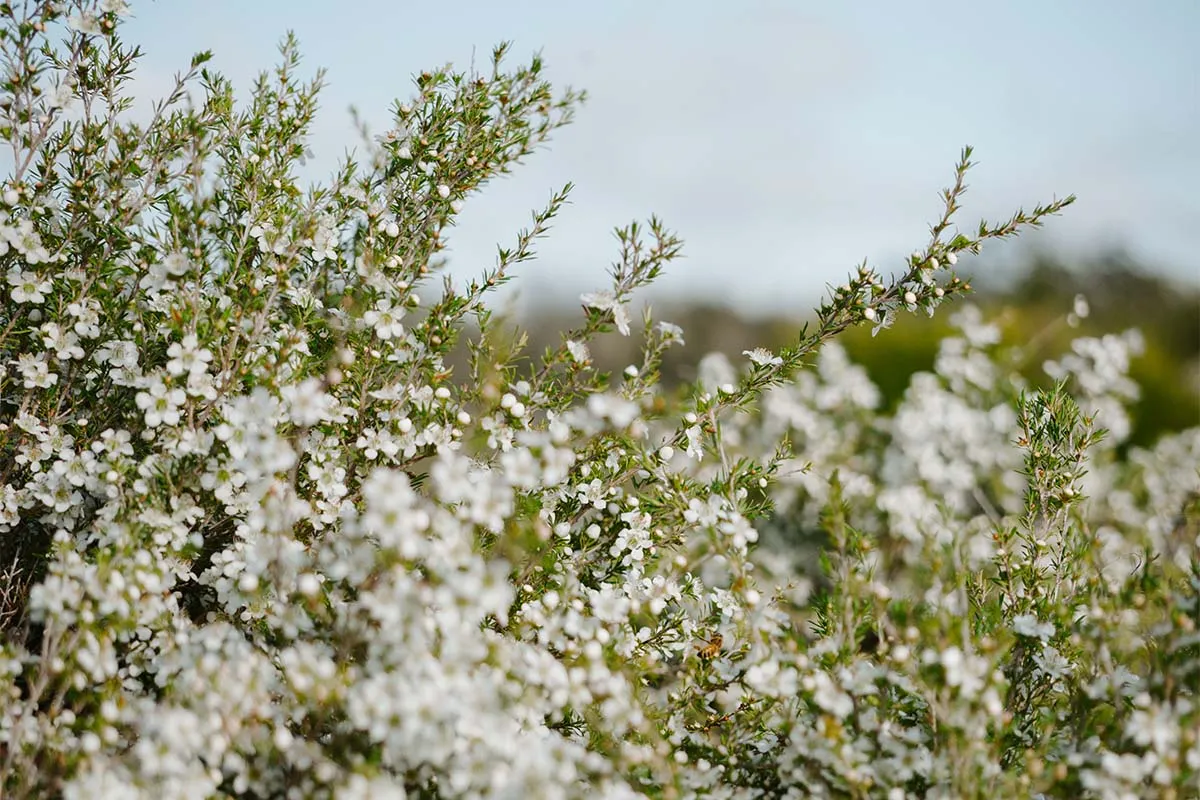
While New Zealand relies on a single Manuka species, Australia is home to more than 80 varieties of leptospermum, many of which flourish along the Fraser Coast. This biodiversity directly influences the honey’s natural qualities.
The region’s native Manuka species create nectar that is:
• deeply aromatic
• rich in natural activity
• varied in complexity from season to season
• shaped by the terrain and coastal climate
This floral diversity is one of the reasons Australian Manuka from this region regularly displays high MGO levels and distinctive sensory notes.
A Pristine Environment That Protects Purity
Purity begins long before extraction. It starts with the land itself.
The Fraser Coast’s relatively untouched environment means:
• no industrial pollution
• clean coastal winds
• low environmental interference
• thriving natural ecosystems
• healthy, resilient bee populations
In such conditions, bees forage freely and consistently from Manuka trees, gathering nectar that carries the true signature of the landscape.
This purity is reinforced through minimal handling, cold extraction practices, and the absence of blending, allowing the honey to remain as close as possible to its natural state.
How Provenance Shapes the Honey’s Character
Just as wine reflects the terroir of its vineyard, Manuka honey reflects the environmental fingerprint of its origin. The Fraser Coast’s combination of coastal climate, biodiversity, and ecological balance creates a honey with unmistakable qualities.
Consumers often notice:
• a refined, complex taste profile
• deep caramel and earthy notes
• a smooth texture shaped by natural origins
• variations between seasonal harvests
• a sense of place in every spoonful
The honey doesn’t just come from the Fraser Coast; it tastes like the Fraser Coast.
Provenance as a Marker of Authenticity
In an industry where blending, bulk production, and global sourcing are common, provenance gives consumers clarity. It tells them exactly where the honey was produced and allows them to trust its purity and origin.
Single-origin Manuka from the Fraser Coast provides:
• clear traceability from hive to jar
• assurance that the honey hasn’t been mixed with imported or lower-quality sources
• confidence in the environment where the bees foraged
• transparency in the production story
For high-MGO honeys, provenance is especially important. The natural conditions required to produce them cannot be replicated artificially, making location an essential part of their rarity.
A Sense of Place Captured in Every Jar
Provenance is more than geography. It is identity. It is the reason one jar of Manuka honey tastes different from another, even when the same species of tree is involved. It is the story of the coastline, the wind, the soil, and the trees that shaped it.
For 24 Degrees South, the Fraser Coast isn’t just where the honey is made. It is the heart of its character. The landscape informs the flavour, the purity, the natural activity, and the uniqueness of every harvest.
When you choose Manuka honey rooted in provenance, you’re choosing an honest expression of nature — one defined by place, protected by craftsmanship, and preserved with care.
Related posts
What Makes Australian Manuka Honey Unique? A Look Into Our Native Biodiversity

Inside the Hive: How Healthy Bees and Pristine Environments Shape Premium Manuka Honey

The Art of Cold Extraction: Preserving the Natural Integrity of Manuka Honey
Understanding MGO: What It Means and Why It Matters in Manuka Honey

Monofloral, Unblended, Single Origin: Why These Qualities Matter in Genuine Manuka Honey

Australian vs New Zealand Manuka: What’s the Real Difference?

From Bloom to Bottle: The Seasonal Journey of High-Grade Manuka Honey
Why Provenance Matters: The Fraser Coast and the Making of Exceptional Manuka

How to Choose a Genuine Manuka Honey: Certifications, Testing, and Transparency